Track & Railway Bridge Anti-Vibration
Railway Track Anti-Vibration Pads & Bridge Bearings
Infrastructure-Grade Noise and Vibration Attenuation Systems for Permanent Way & Bridges
Category Overview
Protect the Track.
Protect the Bridge.
Quieten the Corridor.
Mitigating ground-borne vibrations and structural noise is a critical requirement for modern metro lines, high-speed rail, and heavy-haul railway bridges. Our range of track anti-vibration products includes microcellular foaming rubber pads, durable nylon rail pads, and high-load railway bridge bearings engineered to isolate mechanical shocks before they propagate into surrounding environments.
Installed beneath rails, tie plates, or bridge superstructures, these resilient elastomeric mats stabilize track geometry, protect ballast beds from degradation, and significantly prolong infrastructure service life. Specified against dynamic fatigue requirements, our rail track and bridge vibration isolation pads are selected to deliver consistent damping performance across varied environmental conditions.
-
Reduce Track Settlement
Resilient layers spread load and limit ballast breakdown, helping the track hold its geometry longer.
-
Lower Lineside Noise
Isolating vibration at source cuts structure-borne noise for buildings and communities near the line.
-
Protect Bridge Structures
Bearings accommodate rotation and movement while reducing shock passed into piers and abutments.
Permanent Way Products
Track Anti-Vibration Pads
& Railway Bridge Bearings
Sourced or made to your drawings, samples or technical specification, for contractors, permanent way depots and railway maintenance teams.
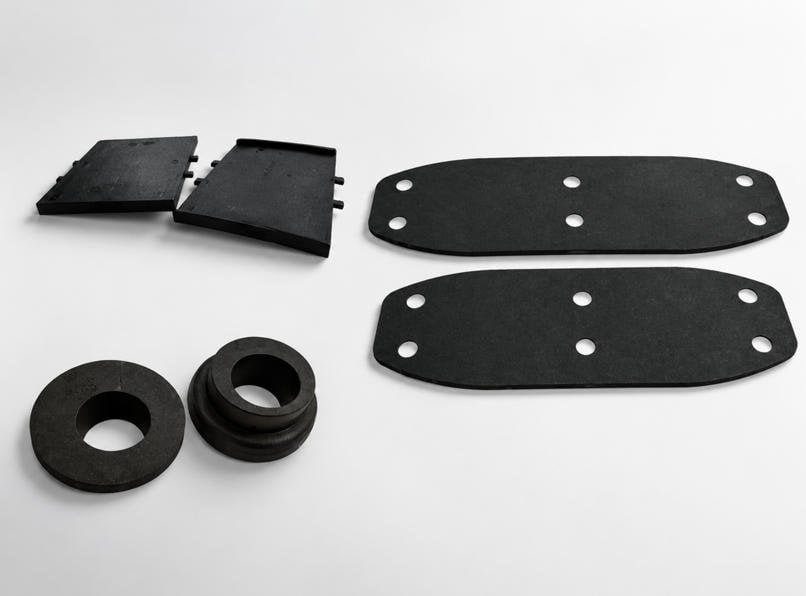
Microcellular Foaming Rubber Track Pads
Resilient under-rail and under-sleeper mats with a fine microcellular structure. They absorb impact energy, reduce ground-borne vibration and help keep track geometry stable in metro, high-speed and heavy-haul lines.
- Track isolation mats in rolls or cut-to-size pads
- Reduced ballast wear and track settlement
- Cut to your drawings and track system
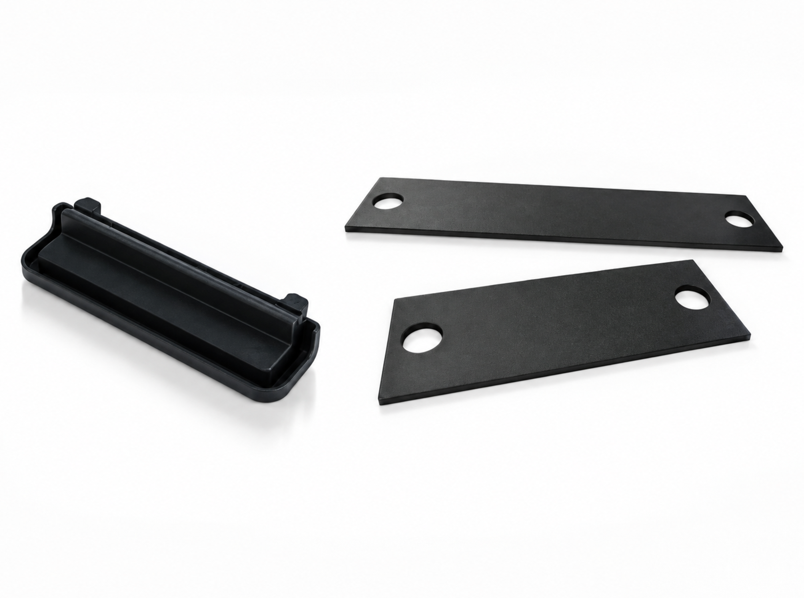
Nylon & HDPE Rail Baseplate Insulators
Rigid and semi-rigid nylon and HDPE pads for rail seats, baseplates and tie plates. They give electrical insulation, load distribution and wear protection between rail, plate and sleeper.
- Nylon track pads in black and coloured grades
- Rail baseplate pads and insulators for fastening systems
- Non-standard profiles made to sample or drawing
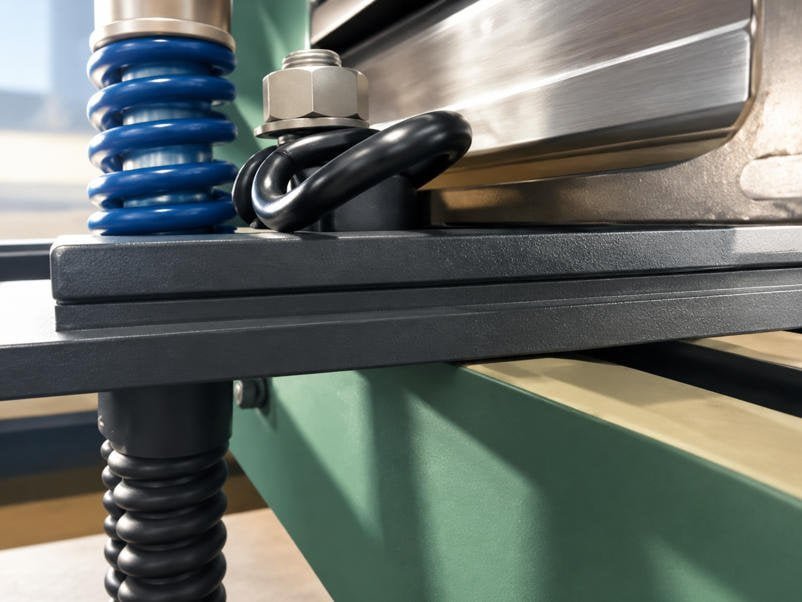
High-Load Railway Bridge Elastomeric Bearings
Laminated elastomeric bearings with steel plate reinforcement for railway bridge decks and girders. They carry vertical load, accommodate rotation and movement, and reduce shock transfer into piers and abutments.
- Plate-type and pot-type bearing options
- Sized to span, load and movement requirements
- Supplied to project drawings
Construction & Performance
Installed Under the Ballast, Proven in the Waveform
Railway track isolation mats are laid beneath the ballast or under the slab track, and anti-vibration pads sit in the rail seat. The result is a resilient layer that damps vibration where it starts, instead of letting it travel into structures and soil.
'/><rect x='650' y='268' width='56' height='10' rx='5' fill='%23FF8C33' transform='rotate(18 650 268)'/><circle cx='642' cy='236' r='15' fill='%23B0BEC5'/><path d='M625 233a17 17 0 0 1 34 0Z' fill='%23E8ECEF'/><rect x='24' y='24' width='270' height='170' rx='4' fill='white' opacity='.92'/><g font-family='sans-serif' font-size='20' fill='%230D233A'><rect x='40' y='40' width='22' height='16' fill='%230D233A'/><text x='74' y='55'>Rail</text><rect x='40' y='68' width='22' height='16' fill='%234A5A68'/><text x='74' y='83'>Sleeper</text><rect x='40' y='96' width='22' height='16' fill='%23B0BEC5'/><text x='74' y='111'>Ballast</text><rect x='40' y='124' width='22' height='16' fill='%23FF6B00'/><text x='74' y='139'>Resilient mat</text><rect x='40' y='152' width='22' height='16' fill='%237A8A99'/><text x='74' y='167'>Concrete sub-base</text><text x='876' y='580' text-anchor='end' font-size='18' fill='%23ffffff'>Under-ballast mat installation (schematic)</text></g></svg>)
On-Site Installation
Mats are laid over a prepared sub-base, joined and covered with ballast or concrete. Pads are placed in rail seats during fastening assembly. Sizes and formats are supplied to suit your construction sequence.
 | Illustrative waveform, not measured data</text></g></svg>)
Vibration Attenuation Comparison
Illustrative waveform: the same train pass with and without a resilient pad. Actual attenuation depends on track design, pad selection and ground conditions.
Without Anti-Vibration Layer
- Higher impact load transferred to ballast and sleepers
- Faster geometry loss and more frequent tamping
- More vibration and noise reaching nearby structures
With GRS-Supplied Pads and Bearings
- Peak loads softened before they reach the substructure
- Better ballast protection and steadier track geometry
- Lower vibration and noise transmitted along the corridor
Technical Data Matrix
Stiffness, Water Uptake & Durability
Values depend on your track system, axle load and environment, so we confirm the target figures for each project. Send your specification and we will respond with matching options and available test data.
| Parameter | Microcellular Foaming Rubber Pads | Nylon & HDPE Baseplate Pads | Bridge Elastomeric Bearings |
|---|---|---|---|
| Dynamic-to-static stiffness ratio | Kept low so the pad isolates vibration under train loading. Target set per project. | Rigid pad. Used for load distribution and insulation, not for resilience. | Compound and laminate design matched to vertical stiffness and rotation demand. |
| Water absorption | Micro-cell structure specified for low water uptake in wet ballast and drainage conditions. | Grade chosen for low moisture uptake and dimensional stability. | Dense elastomer compound with weather and ozone resistance for exposed service. |
| Durability and fatigue | Specified against repeated dynamic loading. Test data can be requested for your project. | High wear and creep resistance under repeated wheel load. | Designed for long service life under cyclic load and thermal movement. |
| Typical installation point | Under rail, under sleeper, under ballast or on slab track. | Between rail, baseplate or tie plate and sleeper. | Between bridge superstructure and pier or abutment seat. |
| Customisation | Thickness, hardness, size and roll or cut-piece format. | Profile, hole pattern, colour and material grade. | Plan size, height, steel plate layout and movement capacity. |
Specifications are set per project and confirmed in the quotation. Please share your applicable standard or drawing with the enquiry.
Request for Quotation
Tell Us Your Track
or Bridge Requirement.
Send the pad or bearing type, dimensions, load data or a drawing. We will reply with availability, lead time and pricing, usually within 24 business hours.
- Product type and required quantity
- Dimensions, hardness or stiffness targets, axle load
- Drawing, sample photo or project specification
- Destination country for shipping
Send Your RFQ
Fields marked with * are required.